The wind atop the Eiffel Tower didn't just blow; it scoured. It stripped away the layers of dust, regret, and the heavy, suffocating silence that had followed Elias for three years.

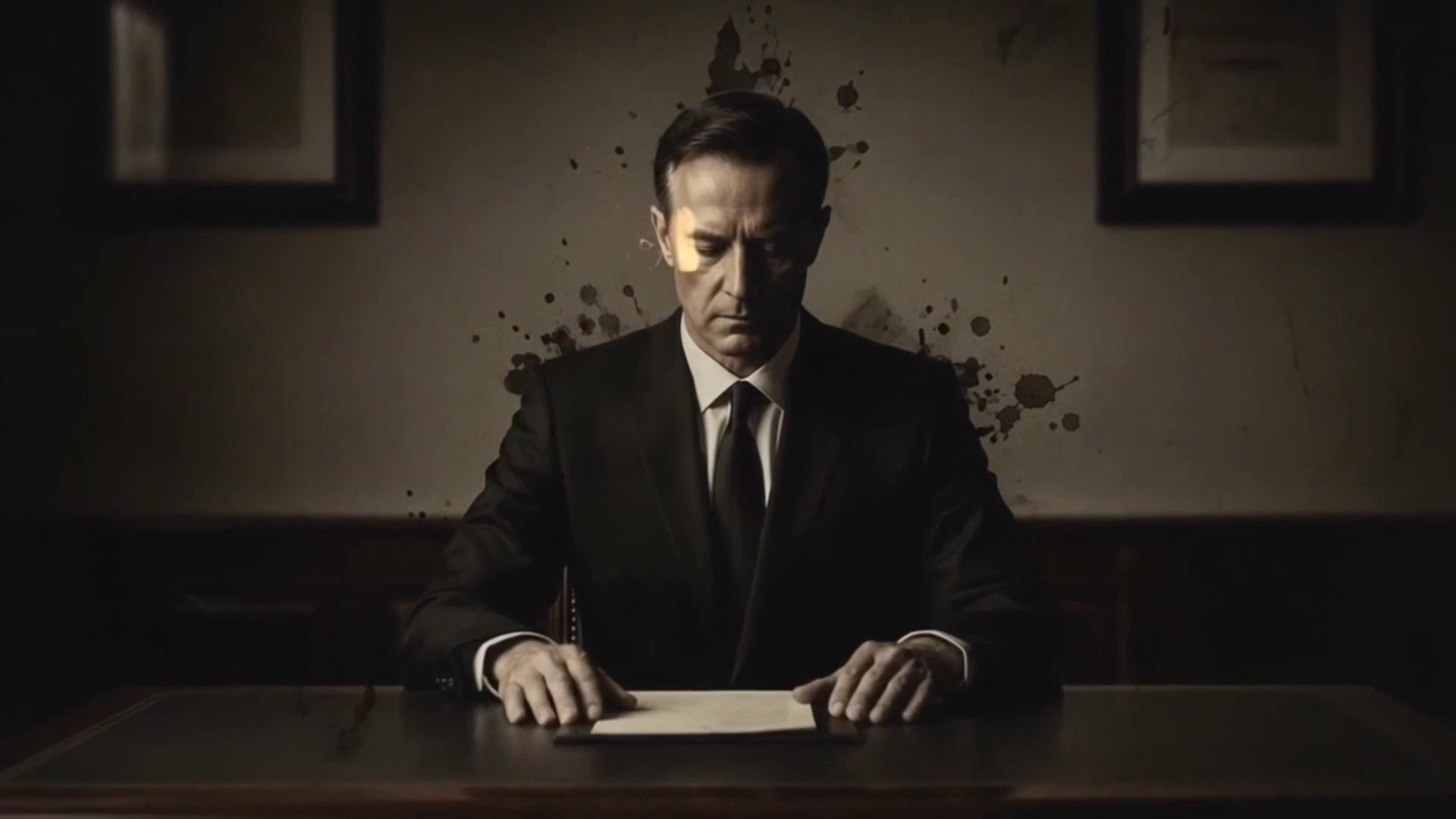
Three years ago, Elias had been a man of substance, or so he thought. He had a corner office in Geneva, a house with a garden that his wife, Clara, tended with a quiet pride, and two children who used to run to him at the door. Then came the fracture. It wasn't a single event, but a slow erosion of trust, a series of misunderstandings that hardened into walls. The separation was messy, fueled by lawyers and cold words. The divorce was final, but the fallout was catastrophic. His firm, sensing weakness, let him go. The bank called in the loans. The house was sold, the car repossessed.

But the true loss wasn't the material things. It was the silence from his children. They had chosen their mother, or perhaps they had chosen the version of their father that existed before the collapse. They stopped answering calls. The letters went unanswered. Elias found himself living in a succession of cheap motels, then a shared room in a basement, working odd jobs that paid in cash and dignity. He became a ghost in his own life, invisible to the world, and entirely alone.

He had no plan to come to Paris. He had no money for a ticket. He had simply walked until his feet carried him to the train station, bought a one-way ticket with the last of his savings, and drifted here, drawn by a vague, desperate need to stand somewhere high enough to see the horizon.

Now, standing on the second platform, the iron lattice of the tower humming beneath his boots, he looked out over the city. The lights of Paris were a sprawling galaxy, indifferent to his ruin. He felt the familiar ache in his chest, the hollow space where his family used to be. He had rebuilt his body, yes. He had learned to fix engines, to cook, to sleep on concrete floors without waking in a panic. But his spirit remained in ruins.

"You look like a man carrying the weight of the sky," a voice said beside him.

Elias turned. Standing there was a woman he didn't recognize. She wasn't striking in the conventional sense; she wore a simple coat, her hair pulled back, but her eyes held a clarity that seemed to cut through the fog of his exhaustion. She didn't look at him with pity, nor with the curiosity one might show a beggar. She looked at him as if she had been waiting for him to arrive.

"I feel like it," Elias admitted, his voice raspy from disuse. "I lost everything. My wife, my kids, my job. I'm starting over from zero."

"Zero is a powerful place," she said softly. "It's the only place where you can build something that doesn't crumble under the weight of who you used to be."

Elias frowned. "Who are you? How do you know about my past?"

"I don't know your past," she smiled, a gentle, knowing expression. "I know your future. Or rather, the path you are finally ready to walk."

She stepped closer, and the noise of the tourists, the wind, the distant traffic—it all seemed to fade into a dull hum. In that moment, Elias felt a strange sensation, a warmth spreading through his chest that had nothing to do with the temperature. It was a feeling of being seen, truly seen, not for his failures or his losses, but for the resilience that had kept him breathing.

"You think you lost your children," she said, her voice steady. "But you lost the version of yourself they needed to love. That version died. The man standing here now, the one who has survived the fire... he is new. And new things take time to grow roots."

Elias looked at her, tears pricking his eyes. "I don't know if I can ever get them back."

"Maybe not," she said, her gaze unwavering. "But you don't need them to find yourself. You need to find yourself first. And when you do, you will be whole enough to love them again, or to love someone else, or to simply love the life you have built."

She reached out and took his hand. Her touch was electric, grounding him to the iron grating beneath his feet. In that touch, Elias felt a profound sense of peace. It wasn't the peace of having his old life restored; it was the peace of acceptance. The pain was still there, but it no longer controlled him.

"Who are you really?" he whispered.

"I am the part of you that never gave up," she replied. "I am the hope you buried under the rubble. I am your divine partner, the one who walks with you when the world turns its back."

The sun began to dip below the horizon, painting the sky in hues of violet and gold. The city lights flickered on, brighter now, reflecting in her eyes. Elias realized he wasn't looking at a stranger. He was looking at the reflection of his own potential, the culmination of every hard choice, every tear shed in the dark, every step taken when he wanted to stop.

He squeezed her hand, and for the first time in three years, he didn't feel alone. The journey ahead was still uncertain. He didn't know if he would ever speak to his children again, or if he would find a new love, or a new home. But he knew, with absolute certainty, that he was no longer broken. He was being built.

"Thank you," he said.

She smiled, and as the wind picked up, she began to fade, not disappearing, but merging with the light, with the city, with the very air he breathed. She was everywhere now.

Elias stood alone on the tower, but he was no longer empty. He turned his back on the view, not to leave, but to face the path forward. He took a deep breath, the cold air filling his lungs, and began to walk toward the stairs. He had a long way to go, but for the first time, he knew exactly where he was going.